
How to Search the Chapel Hill Court Docket
For a Durham-venue state case, any Chapel Hill court docket search starts at the North Carolina eCourts Portal. Got the full record number? Enter it. If not, type the party name into Smart Search. Run it, and choose Durham under the Location filter. Then open the matching case number. Read Case Info plus Assignment before trusting a Chapel Hill address as a clue to venue.
- Start with the case number, citation, or a sufficiently specific name for the Chapel Hill matter.
- Run Smart Search in the Portal before trying to refine the results.
- Set Location to Durham only when the matter is expected to have Durham County venue.
- Open the case record and compare Case Info, Assignment, Case Summary, and Hearings.
- Use the Durham Clerk when the Chapel Hill venue or record access question remains unresolved.
Need a closer look? A Durham case that grew out of a Chapel Hill location can be read through the fuller Durham County case search process. It helps when the case number or assignment needs more review.
Chapel Hill Court Docket Venue
Chapel Hill sits in two counties. So a case tied to a Chapel Hill spot may still be filed or assigned outside Durham County. That is why a Chapel Hill court docket search cannot use the town name as a county filter. The Portal's Durham setting helps only once you expect the matter to be in Durham anyway.
Does a Chapel Hill case land in Durham? Assignment is the field that settles it. It names the court or case assignment where that data is filled in. A result with no Durham showing? Do not force the filter. Do not assume a Durham Clerk record exists. Check venue against the notice, citation, or the court record itself.
Treat the town name as geography on a first pass, nothing more. A Chapel Hill mailing city is not a court assignment. The Durham filter serves a Chapel Hill matter only after the case material supports Durham venue. It cannot turn a result into a Durham record.
Note: A Chapel Hill address can be real while the venue sits in another county. City geography and docket venue must be checked separately.
The Chapel Hill Municipal Court
Chapel Hill has no separate municipal court or city-run docket system for state trial matters. Ordinary Chapel Hill state cases do not start in a town court and then move up to a Durham courthouse. The town name is a place. It is not a court record system.
With Durham venue, North Carolina's state-court structure and the case type set the record path. Where does a Chapel Hill matter show up? District Court, Superior Court, a magistrate, Family Court, or a Clerk probate or special-proceeding category. The unified Durham Clerk keeps the records for all of these trial courts. The department you deal with changes with the case type.
So a Chapel Hill court docket search is a venue question, not a hunt for a missing city link. Case type and Assignment identify the court layer. They beat any presumed municipal court name.
Chapel Hill Court Docket Route
Once Durham venue is confirmed, one framework applies. A Chapel Hill state-court record runs through the North Carolina General Court of Justice. Durham District Court handles misdemeanors, traffic, family, juvenile, and civil actions generally from $10,000 to $25,000. Superior Court District 16 takes felony matters, higher-value civil actions, and eligible District Court appeals. Civil magistrates hear small claims up to $10,000. The governing procedures apply.
Need the official local entry point? The Durham County Judicial Branch landing page serves a Chapel Hill matter with Durham venue.
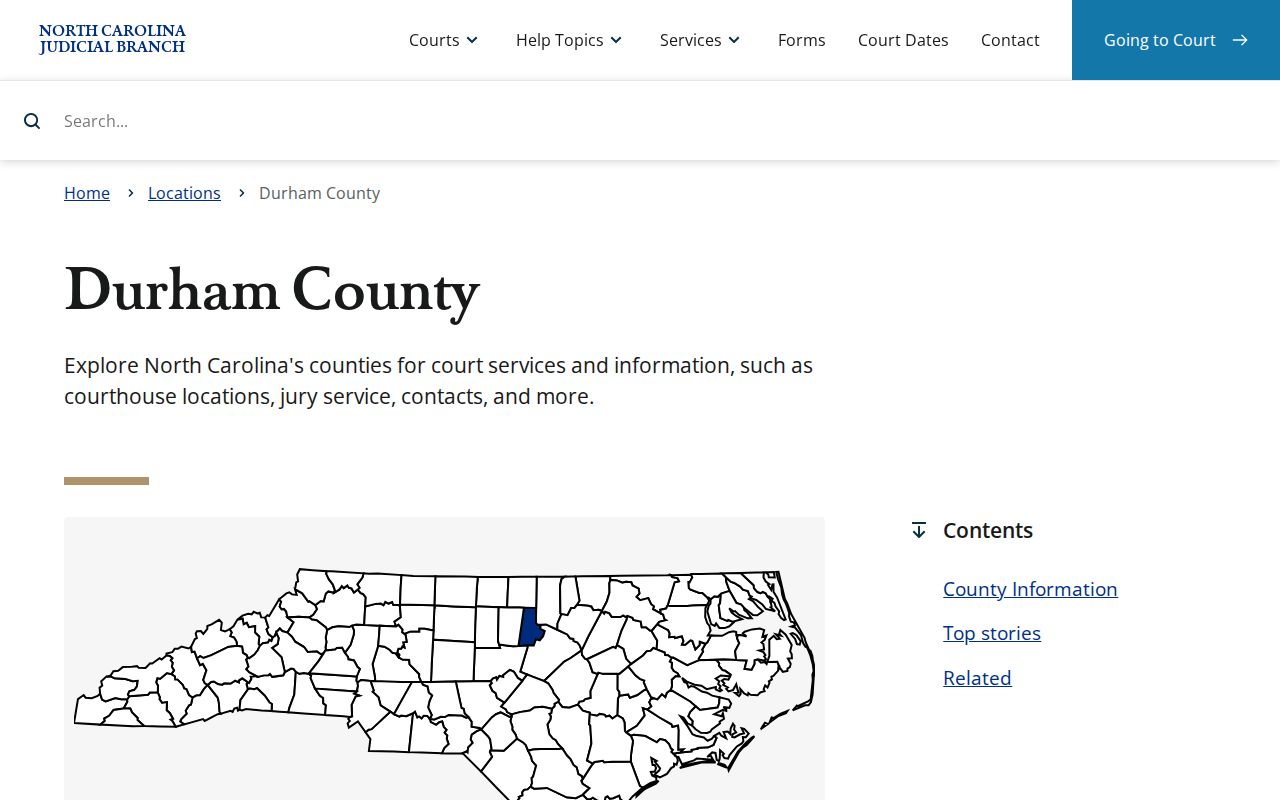
That Durham court page points to the right state-court destination only when the case is truly assigned to Durham County. Otherwise the docket lives elsewhere.
Chapel Hill Court Dates and Settings
In a Durham-venue case, a Chapel Hill court date is confirmed from the state record. Open the Portal result, check the Assignment. Compare the Case Summary with the Hearings section. Keep the two straight. A Case Summary is the chronological Register of Actions; a hearing is a scheduled court event. An old event's date may not be the current one. The Hearings information and the right Durham Clerk department form the better confirmation chain.
| Case Info | Identifies the Chapel Hill-related case and its classification after a result is opened. |
|---|---|
| Assignment | Shows court or case-assignment information where the Portal provides it. |
| Case Summary | Chronological Case Events or Register of Actions, not every filed document. |
| Hearings | Scheduled court events that should be checked for the current date and time. |
| Courtroom or officer | Search Hearings can use courtroom or judicial-officer criteria; confirm any appearance instructions with the court. |
For a Chapel Hill matter in Durham, call Civil at 919-808-3003, Family Court at 919-808-3075, District Criminal/Traffic at 919-808-3002, or Superior Criminal at 919-808-3007.
A Chapel Hill court date is a state-court setting. No town calendar holds it. Plan an appearance from current case information, not city geography.
Chapel Hill Court Docket Filter
Where a case sits matters more than the town name on it. That single idea drives any Chapel Hill court docket search. Smart Search on the Portal needs a record number or a name to start. Only after that do the advanced filters earn their keep, trimming results by Location, case type, case status, or other supported criteria. Set the location to Durham. Do that when the matter truly belongs there. Leave it loose, and the Portal may pull cases from other participating eCourts locations that have nothing to do with Chapel Hill.
The North Carolina eCourts overview draws a clean line between the two services. The Portal handles the lookup. A Chapel Hill state case with Durham venue shows up there. File & Serve is a separate channel for electronic filing. It is not for looking up court records.
Start broad on a name search, then tighten. The Portal caps a result set at 200 matches. A common name can bury the Chapel Hill case you want unless you bring a sharper name, a case number, or the right case-type detail. Once a result opens, check its Assignment. That field confirms whether the case actually landed in the expected state-court location.
The statewide eCourts material shows why this works the way it does. Chapel Hill has no separate town docket, so a Chapel Hill docket search runs through the location-filtered state system instead.
Chapel Hill Traffic Tickets
Do not assume a Chapel Hill ticket means a municipal court. Nothing here supports a Chapel Hill city docket or a local payment process. A state-law traffic citation follows the state court system, its venue, and its case type. The town name on the ticket does not decide where the record lives.
Once venue points to Durham, the Portal gives you three ways in. Case number, party name, or citation search. Confirm the Assignment on whatever result opens. District Criminal/Traffic is the Durham Clerk department to call. Traffic court dates, payments, and related District Court criminal matters fall there. A city label alone never proves Durham is the right record location.
One more tool helps. The Portal's advanced search materials list Citation Number as a search type in the right context. That can pin down a Chapel Hill state-law citation. It works after the venue question is settled. What it cannot do is conjure a Chapel Hill municipal docket or a Durham assignment. The town name alone cannot carry that weight.
Where Chapel Hill Cases End Up
Chapel Hill cases climb no city-court ladder on the way to a county court. There is no first stop to skip or clear. Venue and case type fix the destination from day one. A matter with confirmed Durham County venue may land in District Court, Superior Court, before a magistrate, in Family Court, or in a Clerk proceeding. It depends on the case. Absent that confirmation, the Chapel Hill label should never steer you to a Durham docket. The label is not the venue.
Docket flow: Chapel Hill location or citation › venue and case type › Durham state-court assignment when venue is Durham › District Court, Superior Court, magistrate, Family Court, or Clerk record.
Work the search decision first. Requesting a court date or a record comes second, after you know the venue. Once the Portal opens a result, Case Info and Assignment help. They give you the real court clues. Only a confirmed Durham venue lets a Chapel Hill route end at a Durham court. That order keeps the case search anchored to the court record itself. Town geography does not decide.
Chapel Hill Court Docket Assignment
Assignment is the field to watch after a Durham Portal result opens. It shows the court or case-assignment information wherever the system populates it. Around it sit the other useful tabs. Case Info identifies the matter. Case Events logs procedural activity, and Hearings lists scheduled court events. Read together, they keep a Chapel Hill address from being mistaken for a court designation.
- Case Info
- Basic identifying and classification information in the Chapel Hill-related state case record.
- Assignment
- The court or case assignment shown by the Portal where available.
- Case Summary
- The chronological Register of Actions or case-event history.
- Hearing
- A scheduled court event whose current date should be confirmed in the Hearings section.
- Restricted or sealed
- Information withheld by law or court order, not a route to seek around the restriction.
Note: A Chapel Hill case result only becomes useful once its Assignment and current hearing information are read with venue in mind.
Public Access to Chapel Hill Court Records
A Chapel Hill court record with Durham venue answers to North Carolina state-court access rules. There is no separate municipal-record system behind it. The Clerk maintains the court records, files, dockets, and indexes. Public inspection is open during regular office hours except where access is prohibited. The Portal covers online lookups. But a paper file, a certified copy, historical material, or a restricted record can still require a trip to the right Durham Clerk department or a public-access terminal.
Key rules for a Chapel Hill record:
G.S. 7A-109 requires the Clerk to keep court records and allows public inspection unless access is prohibited.
G.S. 132-1 defines public records generally, while the court-specific rule controls the actual Clerk and Portal experience.
G.S. 7B-3000 withholds juvenile court records from public inspection except as authorized by law or court order.
Sealed, confidential, and sensitive documents never display in the public Portal. A Chapel Hill search can still come up empty. Spelling, format, conversion, venue, or an access limit may be the cause rather than a missing case. The case itself may not be missing. Recheck the venue before asking the Durham Clerk for anything. And never read a missing result as proof that no case exists.
Chapel Hill Court Docket Clerk Check
Say the Portal leaves you stuck on a Chapel Hill matter. You have already tied it to Durham County. Go straight to the Durham Clerk of Superior Court. Have your details ready when you call or visit, from the case number and case type to the document or date you need. Also decide whether you want an ordinary copy or a certified one. That may sound like a lot. It is what moves your docket request to the right desk on the first try.
One reason to be precise is the counter system itself. The Clerk splits local work among several counters. These cover Civil, Family Court, Judgments, District Criminal/Traffic, Superior Criminal, and magistrate matters. The case sits in Chapel Hill. That alone won't tell you which window to use. The Durham Clerk of Superior Court page lays out that departmental routing for any Chapel Hill matter with Durham venue. It shows which counter handles which filings and court records.
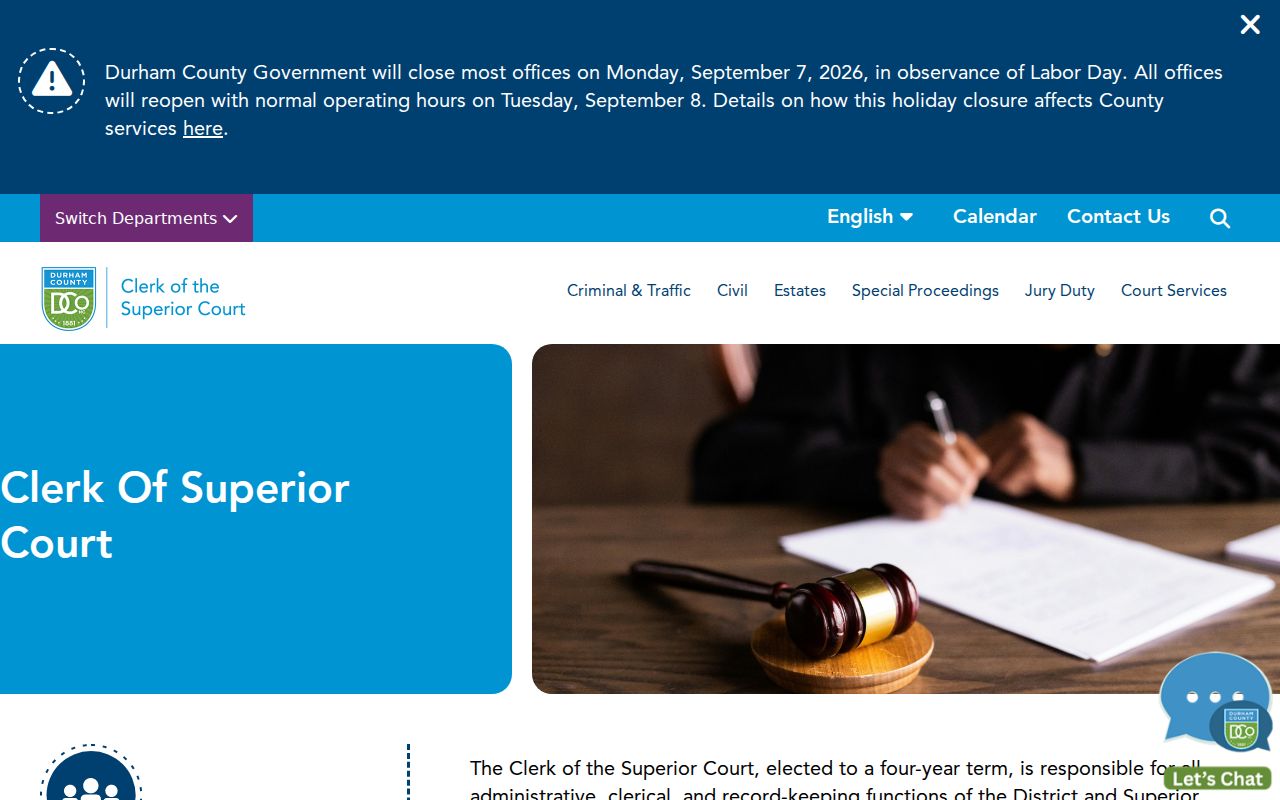
The Durham Clerk source backs up the same point the city page makes. Start with a venue check on the Chapel Hill geography, then route the docket question to the right state-court department.
Durham Clerk of Superior Court
510 S. Dillard Street
Durham, NC 27701
919-808-3000
Ask for the department that matches the confirmed Chapel Hill-related Durham case type.